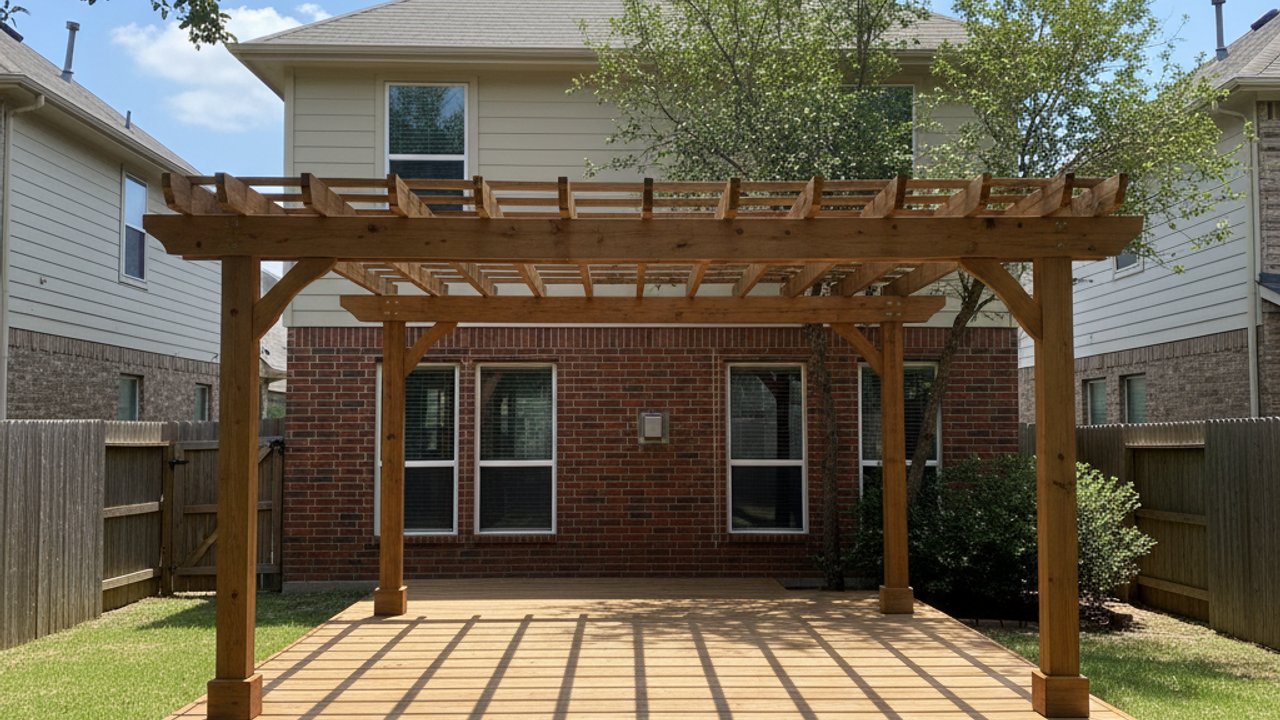
A deck looks simple once it's finished. Four posts, some joists, a surface you can walk on. What happens underneath and before the first board goes down is where most of the problems actually start. Mesquite sits on heavy clay soil and gets a brutal summer sun, and both of those things change how a deck has to be built here compared to a job in sandier or cooler parts of the state. Here's what's worth looking at before the saw comes out.
What the ground is doing under your feet
North Texas clay, the stuff locals sometimes call black gumbo or blackland prairie clay, swells when it's wet and shrinks hard when it dries out. That movement is slow but it's real, and it's the single biggest reason a deck starts to rack or a post starts to lean within a few years of being built. A footing that's only 12 inches deep might feel solid in April after the spring rains and then sit on a half-inch air gap by August. Most footings here need to go at least 24 inches down, sometimes deeper depending on how much clay content is in that particular lot, to get below the zone where the soil swings the most.
If a yard has standing water after a heavy rain, or if the previous owner mentioned cracks in the patio slab, that's worth mentioning to whoever's building your deck before they dig the first hole. It changes how deep they go and sometimes whether they recommend helical piers instead of poured concrete footings.
What's already buried or already there
Call 811 before anyone digs, full stop. Texas law requires it and it's free. Irrigation lines, gas lines, and buried electrical to a shed or hot tub all show up in places people don't expect, especially on lots that have had a sprinkler system added at some point after the house was built.
A lot of Mesquite homes, especially the older ones in the neighborhoods closer to downtown, already have a concrete patio slab out back. Sometimes a deck gets built right over it, which is fine if the slab is sound and sloped away from the house. Sometimes the slab has to come out first, which means demo, hauling debris, and a footing plan that doesn't just reuse the old slab's footprint. Either way it's a decision that needs to happen before design, not during construction.
Where the deck meets the house
The ledger board, the piece that bolts the deck to the house, is where more decks fail than anywhere else. A lot of homes in this area have brick veneer over a wood frame, and you cannot lag-bolt a ledger to brick and expect it to hold. The bolts need to reach the actual framing behind the brick, and the brick itself usually has to be notched or the ledger has to be offset to clear it.
Flashing matters just as much as the bolts. Water that gets behind the ledger and can't get back out will rot the band joist from the inside, and you won't see it until the deck starts to feel spongy near the house. A proper tie-in uses step flashing or a peel-and-stick membrane above the ledger, not just caulk.
Paperwork before the first cut
Attached decks and most freestanding decks over a certain height need a building permit through the City of Mesquite, and that permit process usually involves at least a footing inspection and a framing inspection before the decking goes down. Skipping it isn't worth the risk, it can come back to bite you at resale when an inspector asks for permit records that don't exist.
If you're anywhere near a property line, a quick check against your survey is worth the half hour it takes. Setback requirements vary depending on zoning, and a deck that creeps into a rear setback can mean a stop-work order partway through the job. Newer subdivisions on the east side of town, and some of the developments further out toward Sunnyvale and Forney, also tend to have an HOA with its own rules on deck height, materials, or even stain color. Older established streets usually don't have that extra layer.
Choosing materials for this climate, not a catalog photo
Pressure-treated pine is the cheapest option and it's what most decks here are still built with, but a deck that faces south or west with no shade will check, cup, and gray out faster under a Texas sun than the same board on a shaded north-facing lot. Composite handles UV better and won't splinter, but darker composite colors can get genuinely too hot to walk on barefoot in July and August, sometimes pushing past 140 degrees on the surface.
Whatever you build with, plan on reapplying stain or sealant more often than the can suggests. The UV load here breaks down sealants faster than it does further north, and a schedule of every 2 to 3 years is more realistic than the 4 to 5 years quoted on a lot of product labels.
Drainage and airflow under the deck
Most Mesquite lots grade toward the back fence or an alley, and a low deck built without enough slope underneath will trap water against the house foundation instead of carrying it away. Joists shouldn't sit directly on bare dirt either. A gravel bed and enough clearance for air to move keeps moisture from sitting against the wood and rotting it from below, which is a slower failure but a harder one to see until it's advanced.
A deck built with these ten things checked before the first footing goes in tends to still be solid fifteen years later instead of needing major repair at year five. We go through this same list on every job at Oasis Deck Co, because it's cheaper to get right the first time than to fix after the fact.